

Greek speech has been around for more than 3 000 years. What started as an Indo-European variety, slowly evolved into a distinct language of its own. Today, Greek is considered one of the oldest languages still in use. Although not many people speak it as a percentage of the global population, its influence is disproportionate. It shaped the vocabulary of science, art, and philosophy. Thousands of words across multiple other languages can trace their roots in Greek. Still, despite its contributions, the language carries a certain reputation. That of a beautiful but hard-to-break-into one.
According to the U.S. Foreign Service Institute (FSI), English speakers need around 1100 hours of study to reach working proficiency in Greek.
How hard is it to learn Greek? It depends on many things.
For example, it could be very easy for you to learn the Greek alphabet. But, you might struggle with pronunciation. What is even intonation, am I right?
The Greek language for me is a cosmogony. It is not just a language.
Luis José Navarro
So, is Greek a hard language to learn? In this article, we’ll take a closer look at what makes Greek unique and explore how long does it take to learn Greek, from recognising the alphabet to speaking with locals and using simple Greek phrases to learn.



Why Do People Think Greek Is Hard?
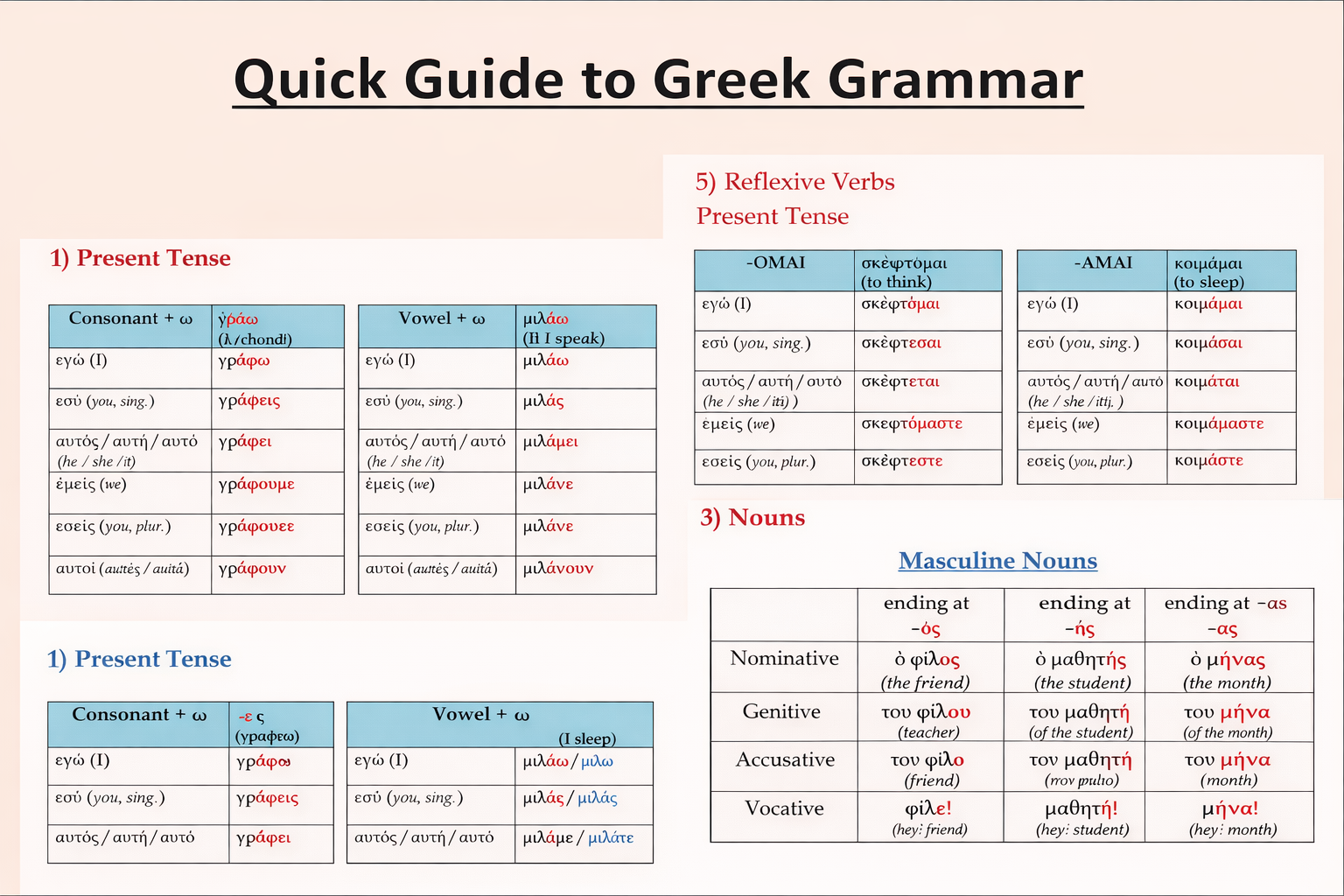
If you are a newbie, Greek can seem a bit daunting at first. Honestly, that's fully understandable. The Greek alphabet looks different, the words are unfamiliar, and the grammar has its own rules that take some time to absorb. Unlike English, Greek nouns have three genders, masculine, feminine, and neuter, and every noun, adjective, and article changes form depending on its role in a sentence. Not to mention the variety of verb endings for tense, mood, and person, and it’s easy to see why beginners often wonder, “Is Greek a hard language to learn?”
Greek may seem challenging at the beginning because it uses a different alphabet and a grammatical system that includes noun genders, verb conjugations, and case endings. However, once learners recognise the patterns behind these structures, the language becomes far more predictable and easier to understand.
Yet these features don’t make Greek impossible, only different. You will quickly start noticing patterns and then, the language becomes far more predictable. For example, noun endings follow clear rules. Verb conjugations tend to repeat in consistent ways. Does it make it any easier? Yes, once you realize there is logic behind the complexity. And as soon as you start seeing that logic, it becomes easier not only to understand the language, but also to appreciate the people who shaped it -some of the most influential Greek figures in history and culture.
Greek evolved with remarkable internal consistency, preserving patterns that make it surprisingly regular once understood.
Geoffrey Horrocks, linguist and author of Greek: A History of the Language and its Speakers
Learning the Greek Alphabet: Your First Step
Before diving into grammar or vocabulary, mastering the Greek alphabet is your first real milestone. Once you can read and write the letters, everything else becomes easier. Pronunciation, spelling, and even confidence. Many learners are surprised to discover that the alphabet isn’t as alien as it first seems. Several letters, such as A (alpha), E (epsilon), and T (tau), look quite similar to their Latin counterparts. Others, like Φ (phi) or Ψ (psi), might feel new, but they’re not as difficult to remember as their shapes suggest.
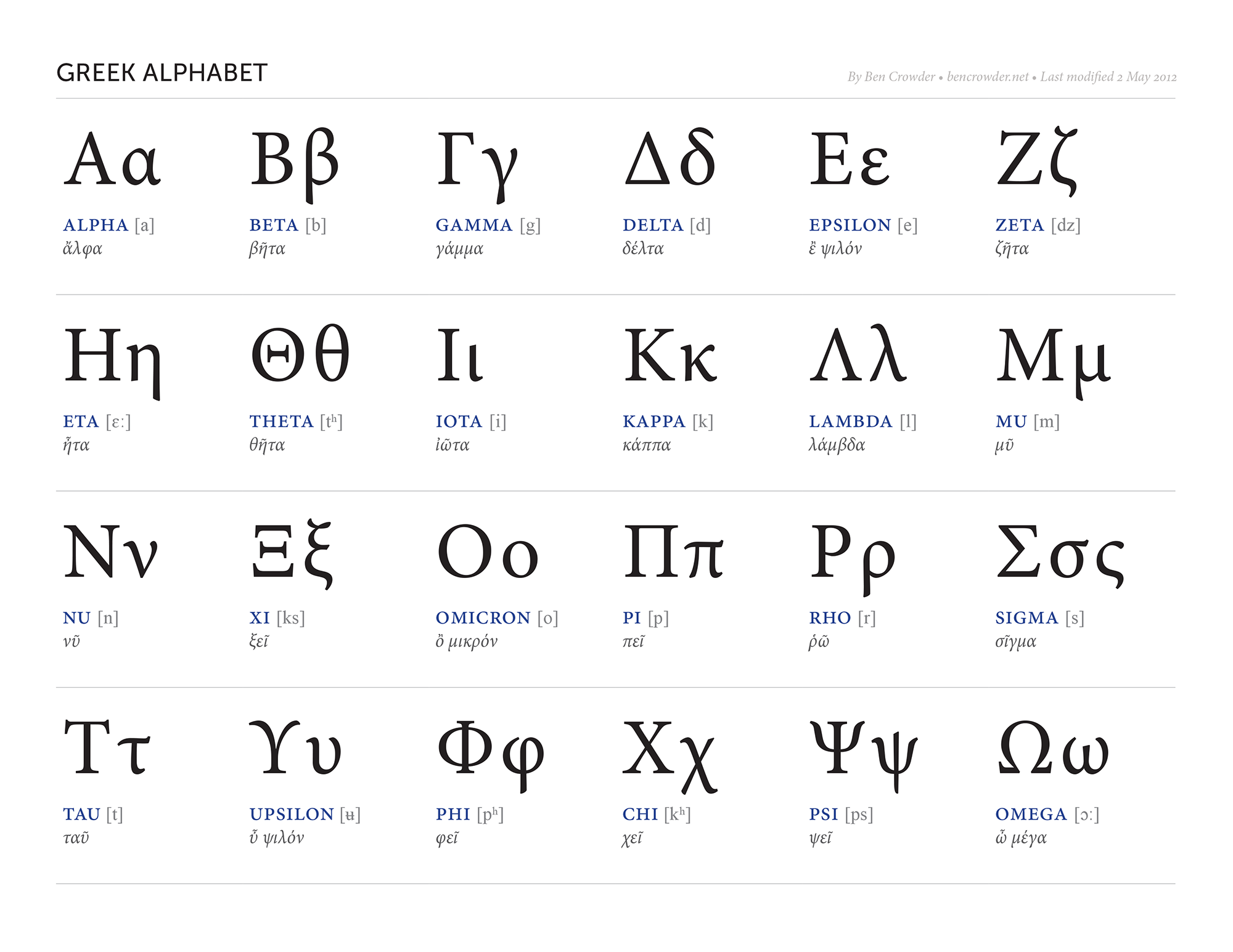
Learning the alphabet also helps with pronunciation because Greek is largely phonetic. That means words are pronounced the way they’re written, a relief for anyone used to the inconsistencies of English spelling. Once you’ve learned the 24 letters and their sounds, reading signs, menus, or even song lyrics in Greek becomes a small daily win. To see how that cultural legacy shaped art, politics, and philosophy, you can read more about the influence of Ancient Greek civilization on the modern world.
To pick it up faster, try combining a few methods:
- Use flashcards to match symbols with sounds and example words.
- Listen to pronunciation apps or YouTube videos where native speakers pronounce each letter clearly.
- Write by hand: the motion helps memory stick far better than typing.
Within a few days of practice, the Greek alphabet starts to feel less like a code and more like a new lens through which you view language. It’s the foundation that opens the door to everything that follows. From reading your first words to holding your first conversation.
How Long Does It Take to Learn Greek?
A very common question that every new student has. How long does it take to learn Greek? The short answer is that it depends on your pace and dedication, but language experts do give us a general idea. According to the U.S. Foreign Service Institute (FSI), Greek is classified as a Category IV language. That means an English speaker needs around 1 100 hours of study to reach working proficiency.
The Foreign Service Institute classifies Greek as a Category IV language for English speakers. This category includes languages that require more time to learn because their grammar, writing system, and vocabulary differ significantly from English.
Let's put that into perspective.
Spanish and French fall into Category I. This means that with an estimated 600 hours of study, you should be comfortable with them. But Greek? They need nearly twice as long, mainly because of its different alphabet, grammar, and structure. Still, this shouldn’t discourage you. With the right methods, progress comes faster than you might expect. And you should not forget that learning a language is always easier when you understand the culture behind it.
A casual learner, with only three hours of study per week, can reach a conversational level in only two years. You’ll be able to:
- Read short texts
- Order food
- Chat with locals about everyday topics.
Not bad, right?
On the other hand, if you study intensively or spend time in Greece surrounded by native speakers, fluency might come within six to nine months.
The real secret in learning Greek, isn’t the number of hours. It's consistency. Make sure to practice the language daily. This practice doesn't have to be simple studying. Listen to songs, watch videos, read or review Greek phrases. It can make a huge difference, even if it doesn't seem like much. Regular conversation practice, whether through language exchanges or lessons with a tutor, will give you a real boost.
Fluency is a journey and journeys take time. Every step brings you closer to understanding the language as well as the rich culture and way of thinking behind it.
Final Thoughts: Learning Greek Is a Journey Worth Taking
If you want to connect with one of the most influential cultures in history, then learning Greek is the way to go. It's the language that shaped how people across the world think about art, politics, and philosophy.
Progress will not be fast. It might even feel slow. It's a language that is very different from what you are used to and thus there will be challenges. The alphabet requires practice, the sounds take time to pronounce correctly, and the grammar introduces a structure that may be new to you. Each part, however, builds on the last. Every hour spent learning gives you a clearer understanding of how the language works and what makes it unique.
The way to make the process more digestible and pleasant, is to set small milestones. Reading a sign in Greek, recognising a word from a song, or saying Kalimera to someone and being understood are moments that prove how far you have come. The Greek alphabet that once felt distant becomes familiar, and the words you once struggled to pronounce start to sound natural. Consistency is what brings results. Even short daily sessions of listening, reading, or practising Greek phrases to learn can make a measurable difference.

Greece is a beautiful country with much to offer. Learning the language will help you experience it on a deeper level. Reading signs and ordering food is important, but can you imagine being able to follow a local conversation in a café or enjoy a film without subtitles? The satisfaction you will feel is a unique emotion. And if you can read the words of ancient thinkers in their original form, then you will know that your efforts have been worthwhile. You gain access to ideas and expressions that do not translate easily into other languages. The more you learn, the more you understand the country’s rhythm, humour, and way of seeing the world.
So, how hard is it to learn Greek?
It's a question you must ask yourself first. How willing are you to study and practice it? How motivated are you to learn? With steady practice, the language becomes accessible. Each new phrase adds to your ability to communicate, and each conversation builds confidence. Learning Greek opens the door to genuine cultural understanding, stronger communication with locals, and a lasting sense of achievement.
Περίληψη με AI:
Σας άρεσε το άρθρο; Βαθμολογήστε το!

 Loading...